$57.92
$110.05
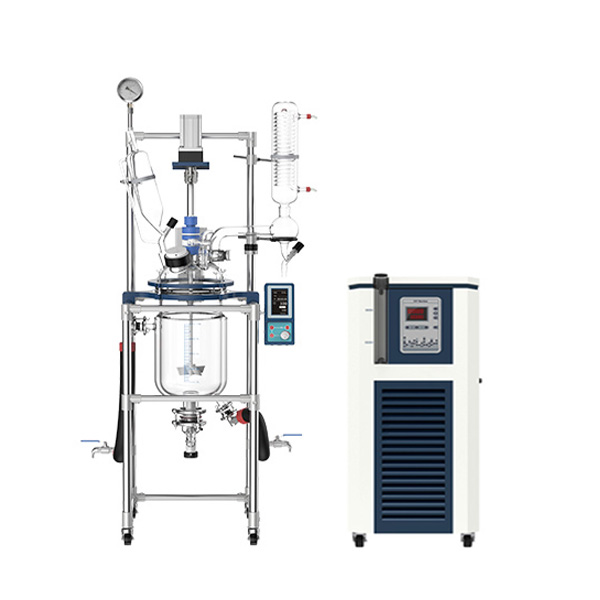
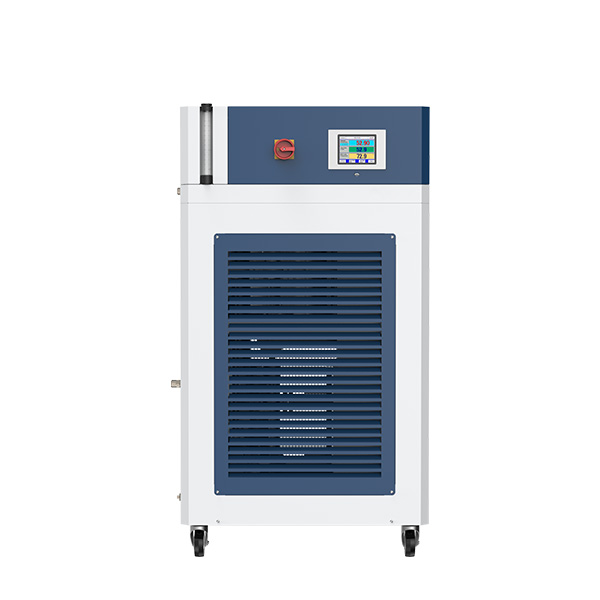
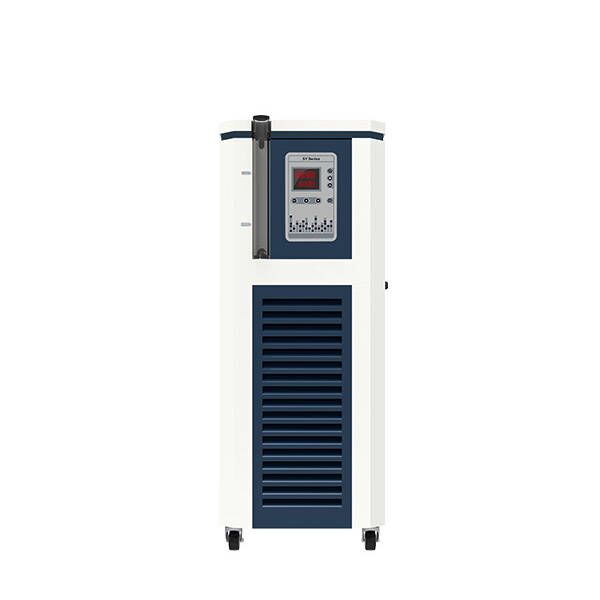
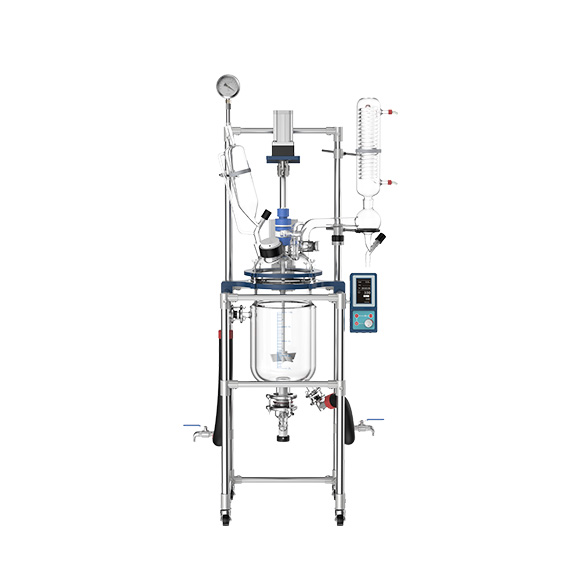
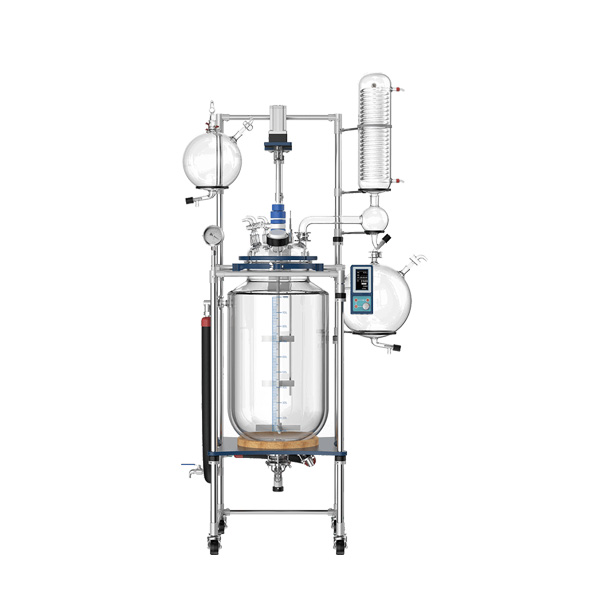
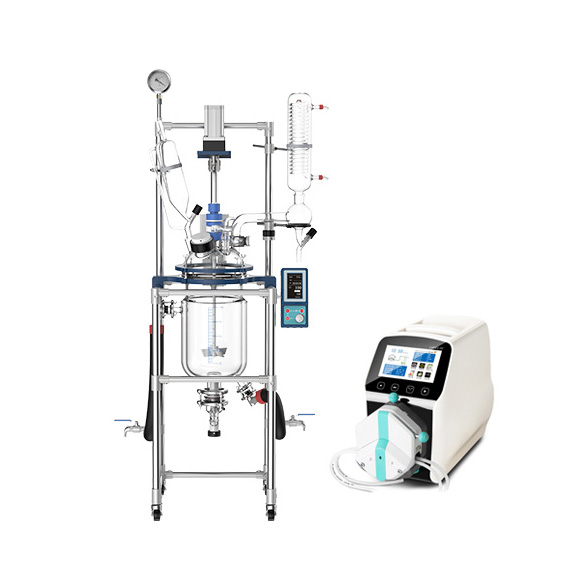
High Quality GR-100CE 100L Jacketed Glass Reactor Main Features and Advantage: ●High borosilicate glass 3.3 has good physical and chemical properties. ●Wide working temperature range: -80~200℃. ●Working pressure: -0.1 MPa to 0.0 MPa. ●Stainless steel hose connected to the jacket inlet/outlet. ●PTFE discharge valve. ●Stainless steel frame, corrosion resistant. ●SUS304 material tray (Optional). ●Low-pressure brushless DC motor, stepless speed regulation, long-life span, high efficiency, low maintenance. ●Intelligent controller and monitor, LED digital display of torque, temperature, time and rotation speed, easy to operate. ●RS485 communication interface on the control box can transfer the data to PC. ●Patented stirring shaft has high sealing efficient and long lift-span. ●PT100 temperature sensor has high control accuracy, SUS304 coated with PTFE tube, double anti-corrosion. ●PTFE stirring paddle, SUS304 coated with PTFE. Technical Parameter of 100L Glass Reactor: Model GR-100/GR-100CE Vessel capacity 100 L Jecket capacity 30 L Pressure in the vessel -0.1-0.0MPa(Ordinary pressure or negative pressure) Pressure in the jacket ≤0.03MPa Working temperature range -80-200℃ Condenser exchanging area 0.954 m² Constant-pressure funnel volume 20L Display window LED Stirring speed 20-500rpm Stirring speed display accuracy ±1rpm Speed regulation accuracy Speed<=300r/min:±0.7% Power supply 100-240V~,50/60Hz Dimensions(mm) 1270W×810D×2360H mm Net weight 119kgs Warranty 12 months, lifetime support Optional Turnkey Solution: Vacuum Pump Temperature Control Unit Applications of 100L Jacketed Glass Reactor: Glass reactor vessels find applications across various industries, especially in chemical, pharmaceutical, and research laboratories. Some common applications include: Chemical Synthesis Glass reactor vessels are widely used for chemical synthesis processes such as organic synthesis, polymerization, oxidation, hydrogenation, and various other reactions. They provide a controlled environment for mixing and reacting chemicals safely. Pharmaceutical Development In pharmaceutical industries, glass reactor vessels are utilized for drug synthesis, formulation development, and process optimization. They enable researchers to study the kinetics and dynamics of chemical reactions involved in drug manufacturing. Material Synthesis Glass reactors are employed in the synthesis of various materials including nanoparticles, nanocomposites, and advanced ceramics. They provide precise control over reaction parameters such as temperature, pressure, and mixing, essential for producing high-quality materials. Catalysis Studies Glass reactor vessels are used for studying catalytic reactions and evaluating the performance of catalysts in different chemical processes. Researchers can investigate factors affecting catalytic activity, selectivity, and stability using these reactors. Pilot Plant Operations Glass reactors are often employed in pilot plant operations for scaling up laboratory processes to industrial production levels. They allow engineers to test reaction conditions, optimize parameters, and assess the feasibility of large-scale manufacturing. Process Optimization Researchers and engineers use glass reactor vessels to optimize chemical processes by systematically varying reaction parameters and analyzing their effects on product yield, purity, and quality. This helps in developing efficient and cost-effective production methods. Biodiesel Production Glass reactors are utilized in biodiesel production processes such as transesterification, where they facilitate the conversion of vegetable oils or animal fats into biodiesel fuel. These reactors provide a controlled environment for the reaction to occur efficiently. Environmental Research Glass reactor vessels are used in environmental research for studying processes such as wastewater treatment, pollutant degradation, and air purification. They enable researchers to investigate the effectiveness of different treatment methods and develop sustainable solutions for environmental issues. Food and Beverage Industry Glass reactors find applications in the food and beverage industry for processes such as fermentation, enzymatic reactions, and flavor extraction. They provide a sterile and inert environment suitable for food-grade production. Academic Research Glass reactor vessels are essential tools in academic research laboratories for conducting fundamental studies in chemistry, chemical engineering, and related fields. They allow students and researchers to explore various reaction mechanisms, kinetics, and thermodynamics principles. Overall, glass reactor vessels play a crucial role in advancing research, development, and production processes across diverse industries, offering a versatile platform for conducting a wide range of chemical reactions and processes. Benefits: 1. Controlled reaction conditions. 2. Visual observation of reactions. 3. Safety due to the double-wall construction. 4. Versatility for various applications. 5. Scalability for process development. 6. Easy cleaning and maintenance. 7. Efficient heat transfer. 8. Corrosion resistance. 9. Cost-effectiveness. 10. Support for research and development efforts. Get In TouchFill out the form below — free quote and professional suggestion will be sent for reference very soon! Name Email* Message Send
Chemical Synthesis